
Can Dyslexics Be Good Musicians? (opens in new tab)
Ten years ago, my husband Steven taught piano lessons to a bright young girl named Jade. Jade was a fun, social third grader who never met a stranger. She excelled at gymnastics and horse riding. She was a natural performer who loved an audience. Jade caught on quickly to math concepts, but reading, spelling, and memorization were much harder. Jade was dyslexic.
Using flashcards, mnemonics (remember Every Good Boy Does Fine?), Steven taught Jade the notes of the staff and simple tunes using the ubiquitous Alfred series. Jade practiced throughout the week, but she made very little progress in learning to read music. To read each note, Jade had to start at the bottom of the music staff and count up using FACE or EGBDF. Every single note had to be figured out afresh. It was like the movie Groundhog’s Day, where the main character relieves the same day over and over again. Jade was unable to determine the next note relative to the one before it on the staff. Frustrations began to mount for both teacher and student! Piano lessons stopped being enjoyable for lack of progress.
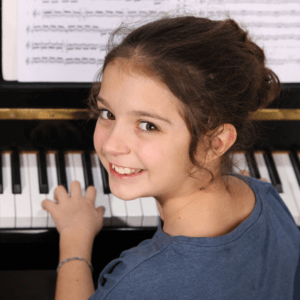
Learning to read music may be challenging for some dyslexic students.
As Steven and I grew in our knowledge of dyslexia, we learned that reading music can be incredibly difficult for some dyslexics. Reading music involves the interpretation of symbols, just like reading words involves the interpretation of alphabet letters. Difficulty in reading music may depend somewhat on the instrument of choice. For example, drum notations are very different from piano or violin. Instead, some dyslexic music students have more success in learning to play by ear or to sing using the solfege method.
Music and reading both have auditory components. Can musical training help give dyslexics a boost? Admittedly, there’s not enough research to draw firm conclusions, but dyslexics certainly can be successful musicians and performers. Music can be a refuge and outlet for those who are struggling in the general education classroom. Just ask musicians like Carly Simon. As a young girl, her dyslexia, stuttering, and facial tics brought such anxiety she wanted to quit school. The rhythm of music helped bring her under control and gave her life a new meaning.
Should you discourage your child from learning to play an instrument? Not at all! Check out this article with FAQ about dyslexia and learning music from Understood.org. Let your child try! Communicate with your child’s teacher about dyslexia and let them know that multi-sensory ways of learning are best. You may unlock a door to a lifetime of musical enjoyment for your whole family!
Hey there!
We’re Nashville Dyslexia Center, your go-to stop for online dyslexia tutoring. We’re here to help overwhelmed parents get the reading help they need. Our mission? To see your child thrive - both academically and personally.
TESTS OF DYSLEXIA
Concerned about dyslexia but unsure where to start? Get started with the diagnostic index.
VIDEO RESOURCES PLAYLIST
01. About NDC
Hear from two clients and their childs’ success.
02. Getting a Diagnosis
for dyslexia
03. Language Development
Insight from a Speech Language Pathologist
GET STARTED
READ THE LATEST POSTS
Inspiring Visit to the Children’s Dyslexia Center of Upper Wisconsin
Hey there! In the busy work of serving families affected by dyslexia, it can be easy to stay focused on our own programs, our own students, and our own day-to-day responsibilities. We can forget to pause. To listen. To learn from the people doing this work in different communities. That is why Erin and Steven’s…
Episode 1: Jacob Blumenstein of KidsRead2Kids
In Episode 1 of the Nashville Dyslexia Center series, Jacob Blumenstein, founder of KidsRead2Kids, shares his passion for helping struggling readers find confidence and joy in reading. This inspiring conversation explores how early experiences with literacy challenges can spark meaningful work, and how compassion, creativity, and structured guidance make a real difference for learners of…
Episode 2: Diagnosing Dyslexia with Dr. Jackie Klaver
Understanding whether a child has dyslexia can be both empowering and overwhelming for families. In Episode 2: Diagnosing Dyslexia with Dr. Jackie Klaver, the Nashville Dyslexia Center brings clarity to the dyslexia assessment process by talking with Dr. Klaver — an experienced neuropsychologist — about what evaluations involve, when to seek one, and how results…
Episode 3: Understanding the Emotional Side of Dyslexia with Tricia Thornton
Dyslexia is most often defined by language-based learning differences — difficulties with decoding, spelling, and reading fluency. But there’s another side to dyslexia that isn’t talked about as often: the emotional experience. In the Nashville Dyslexia Center video “Understanding the Emotional Side of Dyslexia with Tricia Thornton,” families are guided through how dyslexia can impact…
Episode 4: Nicole Holcomb of the Dyslexia Mom Life
When a child struggles with reading, it affects the whole family. Episode 4: Nicole Holcomb of the Dyslexia Mom Life offers an honest and heartfelt look at one parent’s dyslexia journey. Nicole Holcomb — educator, attorney, and founder of Dyslexia Mom Life — shares her family’s experience with dyslexia, including early concerns, the emotional impact,…
Episode 5: Author Cigdem Knebel of Simple Words Books
Dyslexia doesn’t just challenge readers — it also inspires creators. In Episode 5: Author Çiğdem Knebel of Simple Words Books, the Nashville Dyslexia Center highlights how one author’s understanding of dyslexia fuels her mission to make reading more approachable and joyful for children. This episode celebrates creativity, inclusion, and the power of thoughtful book design…
WHAT DO YOU WANT TO READ TODAY?
Search