
Kindergarten Screening Didn’t Catch It? How to Request a Private Dyslexia Assessment


Hey there! Let’s start with something honest: adults sometimes make the mistake of treating a kindergarten screening like a final answer.
A child passes. The school says everything looks fine. Everyone exhales.
Then you notice the struggle at home.
Difficulty remembering letter sounds. Trouble with rhyming. Guessing at simple words. Frustration during story time.
Slow progress. Big emotions. A growing knot in your stomach.
If this sounds familiar, please know that you are not overreacting. A kindergarten screening can be helpful, but it is not designed to identify every child with dyslexia. And a result that does not raise concern does not mean your concerns are unfounded.
Rest assured: you can ask questions, gather more information, and pursue a private dyslexia assessment for kids when concerns persist.
What does it mean if my child passed kindergarten screening but still struggles?
A school screening is usually a brief check of foundational skills. It may look at letter recognition, basic sounds, early writing, language, or classroom readiness.
That information matters. But a screening is not the same as a comprehensive evaluation.
Think of it this way:
- A screening identifies possible risk.
- A diagnostic index estimates the probability of dyslexia.
- A formal evaluation examines learning strengths and weaknesses in depth.
Screenings are often administered to many children in a short period of time. They are not intended to provide a complete picture of phonological awareness, memory, decoding, spelling, reading fluency, and language development.
Some children also compensate well during a short activity. They may be bright, verbal, attentive, or eager to please. A child may know several letters but still struggle to connect letters with sounds consistently. They may memorize a few familiar words while finding it difficult to sound out new ones.
So, a “passed” screening is not a reason to ignore an ongoing pattern.
It is a reason to keep learning.
What are the early signs of dyslexia in children?
Dyslexia is a language-based learning difference that can affect reading, spelling, writing, and the way a child processes spoken and written language. The signs can look different from one child to another.
In preschool and kindergarten, possible signs may include:
- Difficulty learning nursery rhymes or recognizing words that rhyme
- Trouble clapping out syllables in words
- Difficulty learning the alphabet or remembering letter names
- Difficulty connecting letters with their sounds
- Trouble blending sounds to make a word
- Persistent difficulty pronouncing longer or unfamiliar words
- Difficulty learning sequences, such as days of the week or numbers
- Avoiding books, writing, or activities involving letters
- Guessing at words instead of using sounds to read them
- Becoming unusually frustrated by early reading tasks
- A family history of dyslexia or significant reading difficulty
These signs do not automatically mean your child has dyslexia. Children develop at different rates, and one isolated difficulty is not enough to draw a conclusion.
Look for patterns.
The International Dyslexia Association’s early-signs guidance, published through Reading Rockets, emphasizes that persistent difficulties with rhyming, vocabulary, alphabet learning, sound blending, and following sequences may warrant further investigation.
And remember: letter reversals alone do not diagnose dyslexia. The bigger picture matters.

Should I wait and see if my child catches up?
This is one of the hardest questions parents face.
You do not want to label your child too early. You also do not want to miss an opportunity to help.
That tension is understandable.
Here is the compassionate middle ground: you do not have to panic, but you also do not have to remain passive.
Early support does not require you to decide your child’s entire academic future. It simply gives you clearer information and a way to respond to what you are seeing.
A private assessment may help you understand:
- Which foundational skills are developing as expected
- Where your child is experiencing difficulty
- Whether the pattern suggests a higher probability of dyslexia
- Which reading intervention strategies may be appropriate
- What information may be useful to share with the school
Early, specialized reading instruction can build skills before frustration becomes deeply attached to reading. It can also help protect your child’s confidence and sense of resilience.
It is never too late to intervene. But when concerns are already present, clarity can be empowering.
What should I do before requesting a private dyslexia assessment?
A few practical steps can make the process less overwhelming.
1. Document what you observe
You do not need a perfect spreadsheet. A simple notes app or notebook is enough.
Write down specific examples, such as:
- “Could not remember the sound for m after practicing it several times.”
- “Recognized cat but guessed at map.”
- “Could not think of a word that rhymes with sun.”
- “Became upset after five minutes of letter practice.”
Note how often the difficulty happens, what tasks are challenging, and what helps. Save samples of writing or early reading work if you have them.
Patterns are more useful than a single difficult afternoon.
2. Talk with your child’s teacher
Approach the conversation as a partnership. You might say:
“The kindergarten screening did not identify a concern, but we are still noticing difficulty with rhyming, letter sounds, and blending at home. Could we talk about what you are seeing in class?”
Ask the teacher:
- What skills were included in the screening?
- Which specific screening tool was used?
- What were your child’s results?
- Did the screening measure phonological awareness and sound blending?
- How is your child performing compared with classroom expectations?
- What interventions or additional observations are available?
- How will progress be monitored?
You are not criticizing the school by asking for details. You are gathering information so everyone can better support your child.
3. Talk with your pediatrician
Your pediatrician may help rule out hearing, vision, speech-language, or developmental concerns that could affect learning. Ask whether a referral is appropriate for a professional with expertise in literacy and learning, such as:
- An educational psychologist
- A pediatric neuropsychologist
- A speech-language pathologist with literacy experience
- A qualified dyslexia specialist or examiner
You can bring your observation notes and the school’s screening information to the appointment.
What is the difference between a dyslexia screening, diagnostic index, and formal evaluation?
The terms can feel confusing, so let’s make them straightforward.
Dyslexia screening
A screening is a brief measure used to identify children who may be at risk. It can help schools decide who may need additional support or monitoring.
A screening generally does not:
- Provide a full learning profile
- Explain every area of difficulty
- Establish a formal diagnosis
- Replace a comprehensive evaluation
Dyslexia diagnostic index
A diagnostic index is a standardized score or result that estimates the probability of dyslexia based on the child’s performance.
At Nashville Dyslexia Center, our Tests of Dyslexia provide a Diagnostic Dyslexia Index. The Tests of Dyslexia are norm-referenced and standardized, helping families better understand a child’s literacy abilities and the likelihood of dyslexia.
For younger students and emergent readers, the TOD-Early is designed for children in kindergarten through second grade who do not yet read connected text. Nashville Dyslexia Center provides a written, parent-friendly report and a follow-up Zoom appointment to review the results.
The Tests of Dyslexia are an important first step: but they are not a replacement for a formal diagnosis from a qualified examiner or a formal psychoeducational evaluation.
Formal psychoeducational evaluation
A psychoeducational evaluation is a more comprehensive assessment conducted by a qualified examiner. Depending on the child and the evaluator, it may examine cognitive abilities, language, memory, phonological processing, decoding, reading fluency, spelling, writing, and comprehension.
The purpose is to develop a detailed learning profile and determine whether the child meets criteria for a specific learning disorder or another condition.
Ask the professional you contact exactly what their assessment includes and what type of report they provide.

How can assessment results guide reading intervention for dyslexia?
Assessment should lead to action: not simply sit in a folder.
The results can help you and your child’s educational team determine what kind of instruction is needed. A child who struggles with phonological awareness may need explicit teaching in hearing, separating, and manipulating sounds. A child who has difficulty with decoding may need structured practice connecting sounds and letters.
Effective reading intervention for dyslexia is:
- Explicit rather than based on guessing
- Systematic and cumulative
- Responsive to the child’s individual needs
- Focused on measurable skill development
- Provided consistently over time
At Nashville Dyslexia Center, we offer individualized online dyslexia tutoring using evidence-based strategies and specialized reading instruction. Our ALTA-certified tutors work one-on-one with students in phonics, spelling, fluency, comprehension, vocabulary, and related literacy skills.
Online support can be especially helpful for families who need specialized instruction beyond what the local school schedule or available services can provide.
What can I do while I am waiting for an assessment?
Keep learning supportive and low-pressure.
You can:
- Read aloud to your child every day.
- Talk about the story, characters, and illustrations.
- Play rhyming and syllable games.
- Practice letter sounds in short, encouraging sessions.
- Invite your child to find words that begin with a particular sound.
- Celebrate effort, persistence, and small gains.
- Avoid asking your child to guess words from pictures.
- Stop before practice turns into a battle.
Your child needs to know that reading difficulty is a challenge: not a character flaw.
How do I request a private dyslexia assessment?
Start with a conversation. Contact Nashville Dyslexia Center to discuss your child’s reading and spelling challenges, ask whether the Tests of Dyslexia are an appropriate next step, and learn how results may guide intervention.
You can also email info@nashvilledyslexiacenter.com or call 615-999-7072.
A kindergarten screening is one piece of information. It is not the whole story.
If your instincts are telling you that your child needs a closer look, it is okay to listen. With the right information, specialized instruction, and heartfelt support, your child can build skills, confidence, and a path toward becoming a successful reader.
You are not behind. Your child is not behind as a person.
There is still time to act: and a great deal of room for your child to thrive.
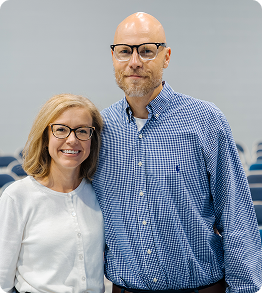
Hey there!
We’re Nashville Dyslexia Center, your go-to stop for online dyslexia tutoring. We’re here to help overwhelmed parents get the reading help they need. Our mission? To see your child thrive - both academically and personally.

TESTS OF DYSLEXIA
Concerned about dyslexia but unsure where to start? Get started with the diagnostic index.
VIDEO RESOURCES PLAYLIST

01. About NDC
Hear from two clients and their childs’ success.
02. Getting a Diagnosis
for dyslexia
03. Language Development
Insight from a Speech Language Pathologist
GET STARTED

READ THE LATEST POSTS

Inspiring Visit to the Children’s Dyslexia Center of Upper Wisconsin
Hey there! In the busy work of serving families affected by dyslexia, it can be easy to stay focused on our own programs, our own students, and our own day-to-day responsibilities. We can forget to pause. To listen. To learn from the people doing this work in different communities. That is why Erin and Steven’s…
Episode 1: Jacob Blumenstein of KidsRead2Kids
In Episode 1 of the Nashville Dyslexia Center series, Jacob Blumenstein, founder of KidsRead2Kids, shares his passion for helping struggling readers find confidence and joy in reading. This inspiring conversation explores how early experiences with literacy challenges can spark meaningful work, and how compassion, creativity, and structured guidance make a real difference for learners of…

Episode 2: Diagnosing Dyslexia with Dr. Jackie Klaver
Understanding whether a child has dyslexia can be both empowering and overwhelming for families. In Episode 2: Diagnosing Dyslexia with Dr. Jackie Klaver, the Nashville Dyslexia Center brings clarity to the dyslexia assessment process by talking with Dr. Klaver — an experienced neuropsychologist — about what evaluations involve, when to seek one, and how results…


WHAT DO YOU WANT TO READ TODAY?
Search
